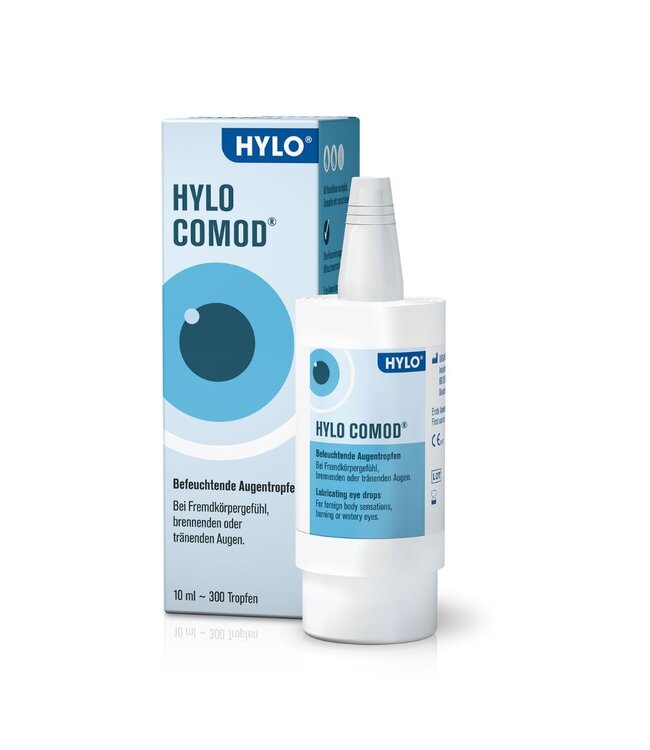
Eye drops with sodium hyaluronate for dry, itchy eyes. Provides intensive hydration, adheres perfectly to the eye's surface, and forms an even, stable layer of moisture. Read more.
Tears are much more than just water… The tear film covering the surface of the eye has a rather complex structure. It consists of a thin outer lipid layer that prevents tears from evaporating too quickly. Beneath this layer lies the aqueous layer, which plays a key role in supplying oxygen and nutrients to the cells of the eye's surface. The even distribution of tears across the eye is ensured by the innermost layer of the tear film, the mucin layer, which is in direct contact with the cells of the cornea and conjunctiva.
If the composition of the tear fluid is disturbed or if the tear glands produce too little tear fluid, the tear film can become damaged (Illustration 2). Consequently, the existing eye cells no longer receive oxygen or nutrients. People whose cells are damaged experience a burning sensation in the eyes or the feeling of a foreign body, often accompanied by significant pain. In advanced stages, this can lead to superficial damage to the cornea or conjunctiva.
Sodium hyaluronate, a molecule naturally produced by the human body, is ideal for lasting and intensive eye hydration. Due to its chemical structure, sodium hyaluronate can attract and retain several times its own moisture weight. It adheres perfectly to the eye's surface and forms a uniform, stable layer of moisture.
Find the order you'd like to withdraw
Enter your email address and order number.
Check your mailbox
If your details match an order, you'll receive an email with a link to view and manage it.